

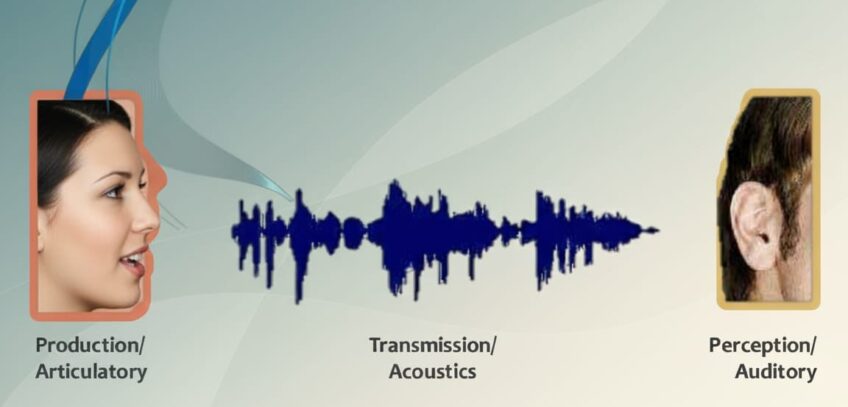
Phonetics, which is the study of speech sounds, forms the foundation of speech-language pathology. It provides the scientific basis for understanding how we produce, transmit, and perceive sounds in everyday communication.
Speech therapists apply these principles to assess, diagnose, and treat various communication disorders. By analyzing how sounds are made and where difficulties occur, they help individuals develop clearer and more effective speech.
The Role of Phonetics in Assessment
Before treatment can begin, a therapist must accurately assess a client's speech sound errors. Phonetics provides the tools to do this systematically.
Phonetic Transcription
Speech therapists often use the International Phonetic Alphabet (IPA) to transcribe a client’s speech and pinpoint exactly which sounds are being produced incorrectly.
Unlike standard spelling, which can sometimes be confusing, for example the “sh” in shed versus the “s” in sugar, the IPA provides a direct one-to-one match between a symbol and a sound.
This system makes it possible to capture even the smallest variations in speech. For instance, it can show when a client produces a lateral lisp on an /s/ sound or when a fronting error occurs, such as pronouncing /k/ as /t/. These fine details often go unnoticed in regular spelling but are essential for accurate analysis.
Because of its precision, phonetic transcription serves as a powerful diagnostic tool. It gives therapists an objective record of a client’s speech patterns, much like a linguistic X-ray.
Instead of just noting the error on the surface, it reveals the deeper mechanics behind sound production, guiding more effective treatment.
Error Analysis
Phonetics enables therapists to categorize speech errors accurately. These may be articulation errors, which involve difficulty with the physical production of a sound (such as a lisp), or phonological errors, which relate to the sound system and rules of a language (such as consistently leaving off the final sound in words).
Making this distinction is essential because it guides the choice of the most effective treatment approach.
For instance, when a child replaces all sounds made at the back of the mouth, like /k/ and /g/, with sounds produced at the front, like /t/ and /d/, the pattern is known as fronting, a type of phonological process.
In such cases, the therapist works on correcting the broader pattern rather than addressing each sound one at a time.
Stimulability Testing
Therapists apply phonetic knowledge to check whether a client can imitate a correct sound when given a model. This assessment helps predict which sounds may be easier to acquire and shapes the order in which therapy targets are introduced.
When a client is stimulable for a sound, it means they can produce it in isolation or within a simple syllable after the therapist demonstrates it. This shows that the client already has the physical ability to make the sound and may only need focused practice.
On the other hand, sounds that are not stimulable often require more detailed instruction and direct teaching on how to produce them correctly.
Phonetics in Articulation Therapy
Phonetic principles are at the heart of therapy techniques designed to correct specific sound errors.
Auditory Bombardment
An important first step in therapy is helping the client recognize and hear the target sound accurately. Developing this awareness lays the foundation for successful production later on.
To strengthen auditory perception, therapists expose the client to the sound in many different words and contexts. This might include reading lists of words, playing recordings, or engaging in games that highlight the target sound.
By hearing the sound clearly and consistently, the client begins to form a strong mental model of it. This process is similar to how a musician must first hear a note correctly before being able to reproduce it on an instrument.
Phonetic Placement Cues
When addressing articulation errors, therapists provide direct instruction on how to physically produce a specific sound. The focus is on teaching the correct movements of the speech organs, also known as the articulators.
Cues are often given for the tongue, lips, and teeth to guide accurate placement. For instance, when teaching the /r/ sound, a therapist might explain that the tongue should be pulled back and slightly bunched while the lips take on a rounded shape.
Visual support can also play a key role. Using a mirror, the therapist allows the client to watch their own mouth and tongue movements, giving immediate feedback and helping them practice until the correct placement becomes natural.
Shaping
One effective technique in therapy is using a sound the client can already produce as a starting point and then gradually shaping it into the target sound. This approach is known as successive approximations.
The idea is to build on existing skills rather than introducing a completely new motor pattern. By making small, guided adjustments, the client can move step by step toward the desired sound.
For instance, a therapist may ask a client to produce a prolonged /t/ sound and then guide them into an /s/ sound by extending the airflow while keeping the tongue in a similar position. This process makes the new sound feel less overwhelming and more achievable.
Monitoring Progress with Phonetics
Finally, phonetics is essential for tracking progress and determining when a client is ready to move on.
Data Collection
Accurate data collection is a cornerstone of effective speech therapy. Therapists rely on phonetic transcription to carefully document how a client produces sounds during each session.
This detailed record goes beyond general observations, allowing therapists to note specific successes and errors.
Progress is tracked across different levels of complexity, starting with simple sound production in isolation, then moving to syllables, words, sentences, and finally conversation.
For instance, a therapist may note that a client produces the /l/ sound correctly 50% of the time in single words but improves to 80% accuracy when using it in sentences. This breakdown shows how performance changes with increasing linguistic demand.
Collecting quantitative data in this way allows for objective measurement of progress. Rather than relying on impression alone, therapists use percentages and accuracy scores to determine whether a client is truly improving.
These numbers provide clear evidence for both the therapist and the client (or their family) about how therapy is working.
Most importantly, this data informs clinical decisions. If a client consistently reaches a target accuracy level, the therapist knows it’s time to advance to the next stage of therapy.
On the other hand, if progress stalls, the data signals that more practice or a different approach may be needed before moving forward.
Generalization
While progress in structured therapy is important, the ultimate goal is for the client to use their new sounds accurately in natural, everyday communication.
This stage is known as generalization, the point where skills learned in therapy carry over into real-world situations.
Therapists assess generalization by checking whether the target sound is produced correctly in different contexts. This includes various settings (home, school, or community) and with different communication partners, not just the therapist.
Achieving consistency across these environments shows that the sound is no longer limited to practice tasks but has become part of the client’s regular speech.
One common way to test this is through a spontaneous speech sample. The therapist may engage the client in unstructured conversation, storytelling, or play, listening carefully for correct sound production without giving prompts.
This natural setting provides the clearest picture of whether the sound has been fully integrated into daily use.
Generalization represents the final and most important measure of success. Once a client consistently produces the sound correctly across different people, places, and situations, therapy goals for that sound are considered complete.
At this stage, the client is equipped to communicate clearly and confidently in everyday life.
Conclusion
Phonetics is not just an academic study of sounds but a practical framework that underpins every stage of speech therapy. From identifying errors with precision to guiding corrective strategies and tracking measurable progress, it equips therapists with the tools needed to deliver effective, evidence-based care.
Most importantly, phonetics helps bridge the gap between structured practice and real-world communication, ensuring that clients move beyond therapy to use their voices with confidence in daily life.